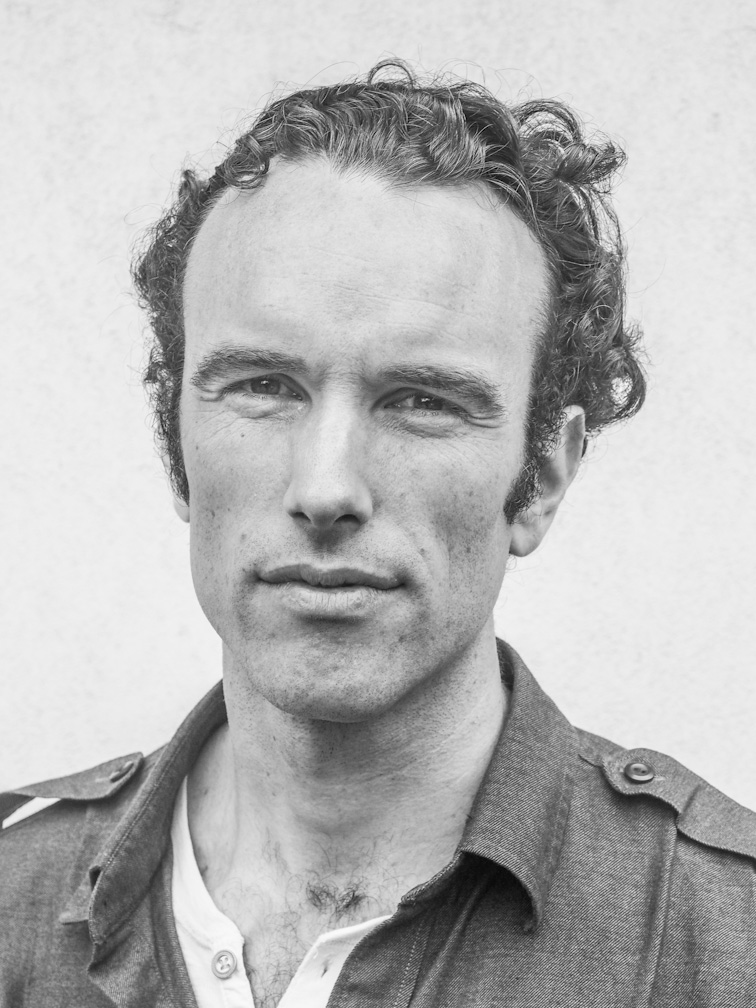
Sources and Methods #8: Azmat Khan

 
Photo credit: Sam Bailey

Photo credit: Sam Bailey


Azmat Khan 101:

TwitterFacebookInstagramGoogle +

-- Tumblr/Blog

-- "The Brothers" (PBS Frontline in Cairo)

-- "The Bombing of al-Bara" (PBS Frontline):

Azmat @ Al-Jazeera America

Azmat @ PBS Frontline

Show Notes:

5:58 - Defining ‘success’ in the digital media age:

It depends on the institution. Some friends of mine have been given quotas to hit. I’ve been lucky not to have to do that. I value response and resonance as an indicator - people writing about it, talking about it online, questions, even critiques, things like that I really value in terms of success. The ideal success of course is when there’s a problem or injustice is to see that result in a conversation that hopefully elicits change.

7:50 - Al Bara Film

10:20 - Is Google News driving all of our news consumption?

Not necessarily - I’d say it’s more social. Facebook in particular, not as much Twitter, is one of the biggest sources of traffic, and it’s not a bad thing for a good thing to be shared a lot. And for people to study data to figure out ways to make it reach as many people as possible. In that way, it can be a very good thing. And there’s the opposite of that - when stories are told in a way just to elicit pageviews of clicks.

11:36 - A follow up point on success in journalism:

That it endures, and can be a reference point for something later… that can be a definitive portrait of something at a particular time.

16:00 - Staying up on social media:

I dip in an out of that depending on how busy I am with other things… But I spent a lot of time in the past curating lists of people to follow on Twitter. This can include newsletters. I use Digg’s website news.me and wakeup with a morning email. I use Reddit Edit.

At the same time, I think there are lots of non-traditional ways I gather information from areas that are less talked about.

Facebook Groups. If there’s an issue that sparks my interest or I want to learn more about or report on, one of the first things I’ll do is see if anyone has coalesced around that issue in a Facebook Group. It’s more useful than Message Boards, so you can message them directly, and it’s super easy to get in touch immediately and quickly. And people get intimate on a place like Facebook. That’s one of the most under-reported tools to use when trying to figure something out. It’s not representative of an issue, but it is individuals, and you can learn so much. It’s an incredible starting place that people don’t think about when they want story ideas.

20:58 - for the kinds of stories I’m doing now, I rely more on individuals than people talking about public issues on Twitter.

24:00 - Right now, one of the most fascinating things you can see online are people who’ve supposedly run off to join ISIS. They have blogs, and social media accounts. They are so interesting. But verification is very hard when it comes to these things. The best reporters have done a good job corroborating the facts… but I do wonder, what does this platform or accessibility do in terms of small errors or embellishment of the truth.

26:00 - Norwegian filmmaker and a fake short on Syria

28:02 - Fake blog taken for real news here. Proof here.

32:33 - I think books are increasingly underutilized. The people who turn to information that isn’t publicly accessible when they’re writing about whatever issue it is online.

33:48 - Brainpickings.org. It’s great because much of the material is not publicly accessible, the information is not at fingertips. There should be more of that, we may be losing a lot of that.

34:31 - I think the internet echo chamber is one of the dangers of how we receive our information. You would think the internet would afford more perspectives and differing ones than what you encounter in real life, walking around, but it actually in so many ways provides the opportunity for people to singularly identify - by hashtag, website, by following people - to actually narrow that down further.

38:10 - Standard research tools for Azmat:

  • Know how to write a Freedom of Information Request

  • Pacer.gov is an invaluable resource

  • Look at the courts

  • Ask for feedback

FOIA Letter Generator here

42:31 - Language classes are a game changer. (Matt and Alex feel quite strongly about this - you should take them. Need inspiration? Read Alex’s great post on why you should learn languages. And then pair with his second post on how you should learn that language.)

46:18 - Being fluent in a language puts you ahead in so many ways, it’s incredible. I can’t even explain it.

49:45 - If it’s Thursday, I’m listening to Serial. Any other day, I’m listening to NPR’s five minute newscast.

50:35 - I’m also obsessed with audiobooks, and prefer fiction.

54:00 - Azmat’s Instagram account.

56:30 - Azmat on Twitter.  

How did she grow her account to some 48,000 people?

It’s about providing a service, or context, or things that people find useful and interesting. Don’t necessarily push a narrative or an opinion - people really liked that.

1:00:01 - Azmat’s Tumblr.

1:04:00 - Azmat’s moving over to Buzzfeed.

Azmat’s Book: Never Let me Go by Kazuo Ishiguro

Matt’s Book: Zero to One by Peter Thiel

Matt’s Story: Why Our Memory Fails Us by Christopher Chabris and Daniel Simmons, creators of the famous Invisible Gorilla test (a Selective Attention test)

Azmat's Music pick:

Alex’s Book: Seasons of Trouble: Life Amid the Ruins of Sri Lanka's Civil War by Rohini Mohan

Azmat’s Film: It’s A Disaster

Azmat’s food she would eat if she were on death row: buttery lobster.

Matt’s Book: Being Mortal by Atul Gawande
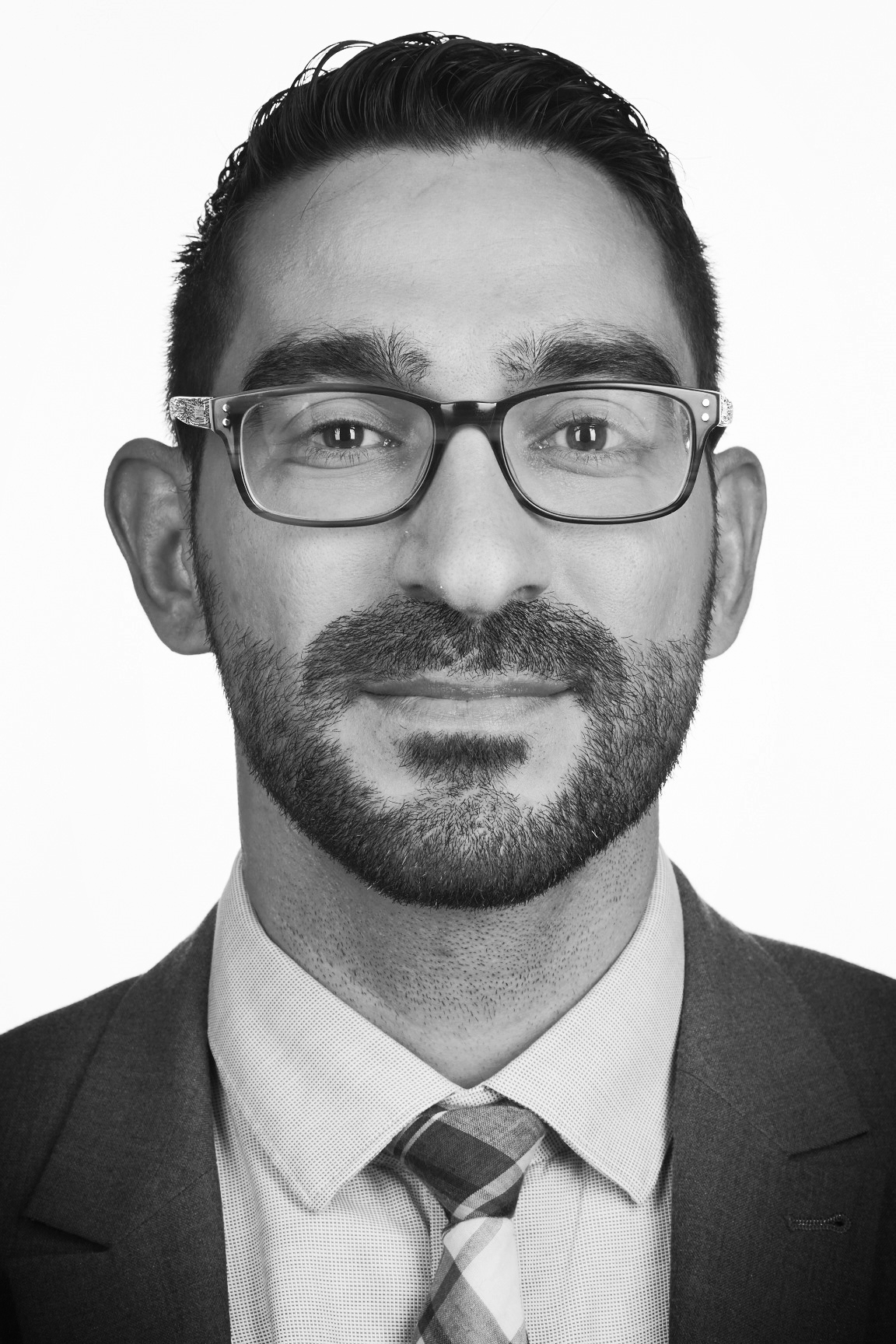
Sources and Methods #7: Ernesto Ramirez


Show Notes:

Quantified Self - wikipedia

Quantified Self (Official Site)

Ernesto Ramirez (Twitter)


Alex’s pick: http://newbooksnetwork.com - Great way to listen to authors talk about new books, new podcasts regularly on a wide variety of subjects.

Matt’s pick: The Ice Balloon by Alec Wilkinson

6:24 - Alex: Quantified Self is interesting for those who may want to use data for self-improvement.

7:35 - Ernesto on QS: The act of collecting information - data - about your individuality, about yourself, whether that’s your health, your activity, your mood, all the things that make up who you are in the world.

People have been doing this forever. Benjamin Franklin’s 13 Virtues is just one example. But I think why this has come to the fore recently over the last five or six years is the increasing ease of collection, and an increasing ease of analysis. This is why there is a thing called Quantified Self.

10:50 - The technology is really what’s driving this forward - there are more and more technologies that are allowing us to gather information about ourselves that a) we were never able to gather before and b) we’re able to gather it much more easily.

11:33 - As these technological changes have come along, there’s been an increasing focus in the individuality of human nature and that - what works for me, may not work for you.

13:15 - The Human Genome Project

14:51 - What we’ve found is that individual stories actually can inspire lots of other people.

17:21 - Rescuetime - an app for time management. Lift - an app for hitting your daily goals.  

19:51 - I collect data in the hope that I can use it in the future to help me answer questions I may have. It can help you develop a rich autobiographical narrative as this data is continually collected.

25:23 - Ernesto’s recommendations to start QS in your life:

  1. Make sure the system you choose to record this data lets you access the data it collects

  2. Start with simple things - simple data visualizations can tell you great stories. Start with scatterplots.

  3. Share your observations with others - you’ll come up with new ways to look at this information

29:50 - Alex: What I like is that in this data, in these visualizations - there’s always a story embedded in that, as to why things happened the way they did.

31:42 - Right now, it’s all about data aggregation, about pulling it all together. But there are a few people working on how to create a subjective context that you need to have to make those more datasets more understood, more useful.

33:01 - Basis Watch that tracks exercise and sleeping in particular.

34:56 - Different companies take different approaches - Jawbone is trying to create automatic insights into your data that they can push to you in the form of simple correlations. Or Basis, which is more focused on helping you develop a stronger habits.

40:10 - Gary Wolf, co-founder of Quantified Self: Ted Talk

42:55 - What would be great would be to see a highly interactive computer system with these data systems that humans could work with, to really start to make this very useful.

44:18 - What people do most often with this technology is actually use it to share their experiences.

46:47 - We hear this all the time: ‘we just want people to donate all their data to us so we could create something interesting.’ What I think is more interesting would be to involve people in the discovery of data itself. Once you have this data, how can you feed back this information to the users who are generating it so it can be more useful?

47:58 - We know that the act of data collection in itself is a mechanism to change their behavior. You give someone a pedometer, they’re going to take more steps, it happens time and time again.

49:28 - I think that’s what it all comes down to - how can people understand and tell the story of their life? In some cases people want to improve, and sometimes people just want to understand, and some people just want to share what’s going on.

Sources and Methods #6: Elliot Ackerman


Show Notes:

[Recorded in Iraq]

2:55 - Alex's blogpost on note-taking [Note-Taking Jujitsu, Or How I Make Sense Of What I Read]

10:13 - I started working on my first book within days of leaving the military.

11:08 - Writing journalism used to be far more common, as a fiction writer. It’s an older model, but for me it’s always felt very natural.

Example: Graham Greene’s Quiet American.

Idea: When I’m starting a novel: It’s like I’m standing in a field of very very dry grass, and I’m trying to start a fire. And what I’ve gone in my hands are two flints, and I’m banging them together as hard as I can trying to make sparks. The flints are something I’ve seen, something I’ve experienced, and the fire is all imagination.

13:24 - The key to being a writer is to write. Every day. No matter what.

14:21 - Each idea often needs a bespoke process for how you’re going to approach that idea.

15:30 - I take umbrage with the rigid definition of ‘fiction writer vs. non-fiction writer.’ These are totally artificial definitions. Even when the subject matter is completely disassociated from the author, the emotional truths there are frequently real to that person’s life. I think of myself as a writer, and when I see subjects I want to approach, I’ll decide how I want to approach it: essay form, long-form, article, etc.

16:45 - Discussing the use of emotional experiences in writing, an excerpt from Elliot’s article published in the Daily Beast here which used one experience as a foundation for a long article:

The Fourth War: My Lunch with a Jihadi

For a moment we sat, three veterans from three different sides of a war that had no end in sight. Not the Syrian Civil War, or the Iraq War, but a larger regional conflict. Amidst all this, Abu Hassar had hit on a unifying thread between us: friendships borne out of conflict, the strongest we’d ever had. I think that’s why I’d sought out Abu Hassar, to see if that thread existed among two people who’d fought against each other. And, for the first time, I wondered why Abu Hassar had agreed to meet with me, a so-called journalist he knew nothing about, except that I was American and had spent some time in Iraq. Maybe he, like me, had become tired of learning the ways we were different. Maybe he wished to learn some of the ways we were the same.

I agreed and Abed began to explain to Abu Hassar that I’d been a Captain in the Marines and had fought in Iraq and Afghanistan. I watched them intently, not understanding their quick Arabic. Abu Hassar began to slowly nod and his gaze moved from Abed to me. Then, once Abed was done, he picked up the water that had been set on the table. He poured a full glass in front of him, emptying his bottle. He handed it to me.

“A Captain,” he said. “So we were both like the handles of the spear.”

I nodded.

18:38 - A poem Elliot loves from the First World War that discusses the power of an emotional experience:

An Irish Airman Foresees His Death

19:30 - Fighting is a very intimate experience. You ask yourself - who were these people that defined me? And did I define them? The seeking is very natural.

23:54 - There’s a shared humanity that we had. Combat is a very human and visceral thing - you’re fighting to keep your friends safe, and yourself safe. He [Abu Hassar] had had those experiences, and I had had those experiences. It’s disorienting to come home and realize that you may have more in common with your adversary after having been through all this than you do with the people at home.

25:12 - The World War I Christmas Truce

25:48 - To talk politics for a second, I think it’s very dangerous to classify your enemy as irrational. That’s a pretty big hedge. If you look through the history of warfare and conflict, many of these people are rational. Now they might be looking at the world through a very very different framework than you are, and that gives them the semblance of being irrational, but if you just throw the baby out with the bathwater and say these people are completely irrational, you will probably have a difficult time formulating a strategy that effective against your adversary.

26:44 - My writing process often starts with an idea, and a first sentence. It will literally be one sentence. I’ll be walking around with it for awhile in my back pocket. And then it’ll be like I’m on the high dive - and the first sentence is you start moving on the board a little bit. And you put it down.

For me, I keep banker's hours about it. I have a word count I do every day. And I really try not to judge what I’m writing as I’m writing it. I’ll let the whole idea play out, and then the revisions begin.

28:02 - Green on Blue, told from the perspective of a young Afghan soldier who kills an American. Started with one sentence.

29:02 - It’s famously been said: writing is rewriting. But you have to start, and you have to keep going, and you have to get to the end.

30:57 - It’s important to disambiguate your business from your writing.

33:26 - In the novel, I wanted to take an action that at face value would seem like the most deceptive action we can see - when Afghan soldiers trained by Americans shoot one of their American advisors in the back, and I wanted to peel that back in a novel, and show the journey someone would take who would do this. So when the action is taking place, not only can you understand it, you find yourself thinking I would’ve do the exact same thing.

34:38 - Anytime you write anything, you’re trying to create an emotional connection to the reader.

35:56 - The fiction I enjoy isn’t prescriptive, it’s portraiture. It’s giving someone a real sense of a landscape and moral topography so they can decide what they think about that world.

37:06 - [on good fiction] It’s something that elicits an emotional or intellectual response in the reader.

38:28 - The Sound And The Fury: it’s not something everybody gets the first time they read it.

39:39 - Some of the greatest books are books people hate, and they create really interesting conversations. Read The Confessions of Nat Turner by William Styron, it’s about a slave-rebellion in the Virginia Tidewater area. Hugely controversial when it came out, but it’s a great book.

40:22 - I don’t know if there’s a criteria by which someone can judge fiction writing. Frankly, it’s one of the things I kind of like about it.

41:27 - I think it’s a fiction that there are ‘fiction gods’ (that you have to appease to publish). I think there’s a rough justice, but if something’s good, it’ll get picked up. There’s a sense that there’s an us vs. them, writers vs. publishers, but I’ve never found that to be true.

42:30 - If you’re a writer, you better strap on your rejection pants and get ready for it. That’s part of any artistic form - rejection. Lots of rejection. Great writers are rejected all the time. Established writers are rejected all the time. Again, divorce the business from the art.

On picking the next book: I find myself reading a lot on issues outside my world (not reading on Iraq or Afghanistan). I’m reading Love Me Back right now, it’s a coming-of-age story, and it’s amazing, gritty and powerful. So while I don’t have a specific process, I do make sure I’m always reading.

46:57 - Elliot on Twitter

47:30 - Reading international newspapers definitely gives a different perspective, and I would encourage everyone to do it. Where you can, it’s good to triangulate your news sources.

49:30 - On his writing process: I don’t leave where I am until I hit my daily word count, usually 1,500 words. And the evening is dedicated to reading. I’m often taking notes in the margins of things I’m reading and frequently go back to those things. And I’m very disciplined about writing ideas down - get it down, in a notebook or in the notes page in my iphone. I hate saying this because I’m the guy who was a Marine, but discipline goes a long way. When something comes in your mind, write it down. Take the time and do it. It’s amazing what you build if you crack at it every single day.

53:22 - Advice to aspiring fiction writers:

I think one thing I maybe did right early on - I suspended belief in a lot of ways. I said I’m just going to do this, and I don’t know where this is going to go, but I’m going to keep doing it. If you try to conceptualize an entire book, or think about a timeline or selling it - you just need to start. You need to enjoy it as much as you can - it may not always be enjoyable, but do it. And you have to be brave. I think it takes a lot of courage to write. I really do. And I don’t say that in a pollyannaish way. People are going to read your ideas and tell you whether or not they like them. People will say they don’t like it.

55:56 - On rejection, Norman Mailer’s The Naked and the Dead was rejected 25 times before it got published and then it was on the New York Times best sellers list for something like 60 weeks.

56:26 - Also, go find other writers. Tap into a community. If you’re going to be writing fiction, you need to be a good literary citizen.

58:45 - Faulkner has a great quote: The only thing worth writing about is the human heart is conflict with itself.

59:47 - I wouldn't necessarily encourage everyone to write. You have to want it. If it moves you. Not everyone should be a writer - or a banker or a doctor. I feel a compulsion to write. Even if my books were not coming out, I would still write. It's how I think. It's how I process events. It's how I distill meaning from the events in my life.

1:01:32 - I think it's dangerous to ascribe the value of your art to some end.

1:02:12 - I think if you're a writer, you need to publish.

Elliot's book: Andre Malraux’s Man's Fate

Elliot's film: The Seventh Seal by Ingmar Bergman.

Matt's book: This week, reading Dataclysm by Christian Rudder